South Africa Women Crush Pakistan by 150 Runs (DLS) to Top ICC Women’s World Cup 2025
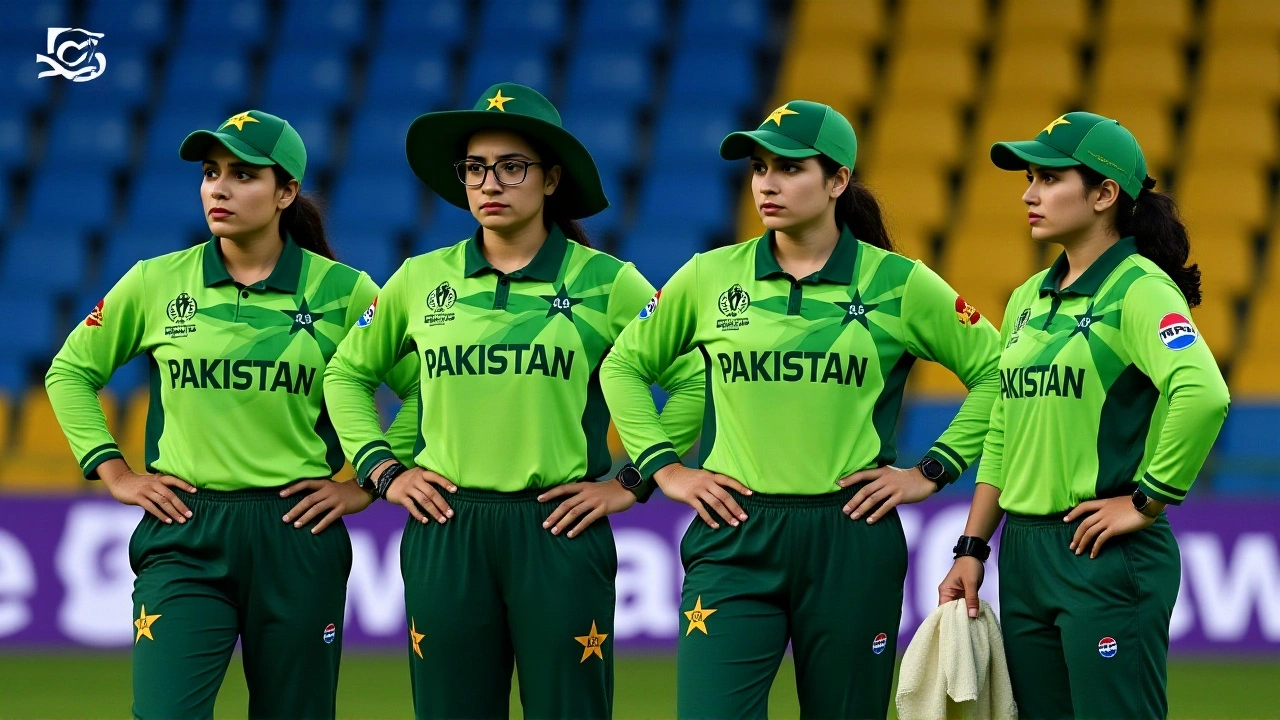
When the rain finally stopped at R. Premadasa Stadium on Tuesday, October 21, 2025, South Africa Women had done the unthinkable: they’d posted their highest-ever total in a Women’s World Cup — 312/9 in 40 overs — and then watched Pakistan Women collapse to 83/7 under a revised DLS target, handing them a crushing 150-run victory. The win wasn’t just about runs and wickets. It was about resilience. About seizing control when the skies opened twice, and the match hung in the balance. Now, with five straight wins after an opening loss to England, South Africa Women sit atop the ICC Women's Cricket World Cup 2025 standings with 10 points, while Pakistan Women — winless in six games — are officially out of semi-final contention.
When the Rain Came, South Africa Was Ready
The match began under clear skies, but by the second over, the heavens opened. South Africa, having won the toss and elected to bat, were 6/1 in 2.0 overs when the first rain delay hit. When play resumed, the target was reset to 50 overs reduced to 40. Pakistan’s captain, Fatima Sana, had hoped for a low-scoring battle. Instead, they got a storm of boundaries. Laura Wolvaardt smashed 90 off 92 balls, weaving elegance with aggression. Sune Luus added 61, anchoring the middle overs. And then came Nadine de Klerk — a whirlwind 41 off just 16 deliveries, including four sixes. That’s right: 11 sixes in total. The most by any team in this tournament. The crowd, already buzzing from the earlier rain, fell silent as the scoreboard climbed. By the 35th over, South Africa had already surpassed their previous World Cup best.There were near-misses, too. De Klerk was dropped on 17 by Nadeem Sundhu. C. Tryon was spilled on 13 by D. Baig. In cricket, those chances matter. In a rain-affected game like this, they became lifelines. South Africa didn’t waste them.
Pakistan’s Chase Crumbled Under Pressure — and Rain
Pakistan’s reply began with promise. Fatima Sana, the captain, led from the front, but the pressure mounted. Nashra Sandhu and Sadia Iqbal gave everything — Sandhu took 3/45, Iqbal 3/63 — but the scoreboard barely budged. At 48/4 in the 12th over, the second rain delay arrived. The umpires — Eloise Sheridan, Narayanan Janani, and Vrinda Rathi — consulted the DLS model. The revised target? 234 in 20 overs. That’s right: from 306 in 40, now 234 in 20. A target that required 11.7 runs per over. Against a South African attack that had already broken 100 in the Powerplay.The collapse was swift. Rameen Shamim was run out on the final ball of the innings, sealing Pakistan’s fate at 83/7. No one reached 25. No one even looked like they could. The crowd, mostly neutral, rose in applause — not for Pakistan, but for the sheer dominance of South Africa’s performance. This wasn’t just a win. It was a statement.
Marizanne Kapp: The Quiet Force Behind the Victory
While Wolvaardt and Luus got the headlines, the Player of the Match was Marizanne Kapp. Her 68 not out came at a strike rate of 136, and she then returned to bowl 7 overs, taking 3 wickets for just 27 runs. She didn’t celebrate loudly. Didn’t need to. Her calm, clinical execution — especially in the 30th over, when she dismissed both Sana and Sidra Nawaz — turned the tide. Kapp, 33, has been the unsung engine of this South African side. She doesn’t tweet. Doesn’t do interviews mid-tournament. But her numbers? They speak louder than any press conference.Her performance was the difference between a good win and a historic one. In the last three matches, she’s taken 11 wickets and scored 174 runs. That’s not luck. That’s leadership.
What This Means for the Tournament
South Africa’s fifth straight win has them on a collision course with defending champions Australia Women in their final group match on October 25. Australia, who beat Pakistan by 107 runs just days earlier, still have a game in hand. But if South Africa wins, they’ll finish top of the group — a huge psychological edge heading into the knockout stage.Pakistan, meanwhile, are done. Four losses, one washed out, and now this — their heaviest defeat of the tournament. Their last match against Sri Lanka on October 24 is purely about pride. They’ve lost every game they’ve played in Colombo this tournament. The rain didn’t help. But neither did their batting depth. Or their fielding. Or their ability to handle pressure.
Weather, Not Just Skill, Shaped This Tournament
Let’s not pretend this was a clean contest. The R. Premadasa Stadium has seen nine matches so far. Four ended without result. Rain has been the third team in every game. But here’s the thing: South Africa adapted. Pakistan didn’t. In 2022, England won the World Cup despite rain delays — because they had the depth, the temperament, the plan. South Africa now has that same aura. They didn’t just survive the weather. They weaponized it.Meanwhile, Pakistan’s campaign is a cautionary tale. They’ve had talent — Nashra Sandhu is world-class — but no one else stepped up. No one batted beyond 22. No one bowled with consistent control. And when the DLS formula changed the target, they froze.
What’s Next?
South Africa’s path to the final now looks clearer. They’ve beaten India, New Zealand, Bangladesh, Sri Lanka, and now Pakistan — all in the group stage. Their only loss? To England, who are still in the hunt. If they beat Australia, they’ll be favorites to reach the final. If they lose? It sets up a nail-biting tiebreaker with England or Australia for top spot.Pakistan’s next chapter is uncertain. Their board will likely review their selection policy. Their captain, Fatima Sana, has been brave but outmatched. The team needs younger batters, better fielding drills, and — most of all — a mental reset. Cricket isn’t just about talent. It’s about handling chaos. And right now, South Africa handles it better than anyone.
Frequently Asked Questions
How did the DLS method change the target during the match?
The first rain interruption reduced South Africa’s innings from 50 to 40 overs, raising Pakistan’s target to 306 in 40. After a second delay when Pakistan were 48/4 in 12 overs, the target was recalculated to 234 in 20 overs — a steep 11.7 runs per over required. The DLS system accounts for wickets lost and overs remaining, making the revised target significantly harder than a flat 306 in 40. Pakistan’s early collapse made the chase impossible under the new formula.
Why is Marizanne Kapp considered so vital to South Africa’s success?
Kapp is the only player in the tournament to score over 150 runs and take 10+ wickets in the group stage. Her ability to anchor innings under pressure and then break partnerships with her medium pace makes her invaluable. In this match, her 68* came at a time when South Africa needed stability after early wickets, and her 3/27 in the powerplay stifled Pakistan’s momentum. She’s the quiet heartbeat of the team.
What does this result mean for South Africa’s chances in the knockout stage?
With 10 points from six matches, South Africa leads the group. A win against Australia on October 25 would seal top spot, giving them home advantage in the semi-final if they advance. Even a loss might not hurt — they’ve already beaten Australia in the group stage in 2022, and their current form suggests they’re better than last time. They’re no longer underdogs. They’re now the team everyone wants to avoid.
Why has Pakistan struggled so badly in this tournament?
Pakistan’s batting lacks depth beyond Fatima Sana and Sidra Nawaz. Their top order has averaged just 18.3 in wins, and their middle order has collapsed in every match. They’ve lost all six games — four by over 100 runs. While their spinners are competent, they lack pace variety and fielding sharpness. Their defeat by 150 runs under DLS wasn’t an anomaly — it was the culmination of a pattern: talent without structure, passion without preparation.
Has rain affected other matches in the 2025 Women’s World Cup?
Yes. Four of the nine matches at R. Premadasa Stadium ended without result due to rain, including the Australia vs. Pakistan game on October 8, where Pakistan were bowled out for 114 chasing 222. The wet conditions in Colombo have forced organizers to use DLS in nearly half the matches. Teams with deeper squads — like South Africa, Australia, and England — have adapted best. Others, like Pakistan and Sri Lanka, have been exposed.

20 Comments

Danny Johnson
That Kapp performance was next level. Quiet as a library, deadly as a sniper. No fanfare, no flexing - just pure cricket mastery. This is why South Africa’s got that quiet killer instinct now.

Serena May
11 sixes. That’s not cricket. That’s a power play on steroids. 🤯

Christine Dick
Let’s be clear: this isn’t ‘resilience.’ This is a textbook case of Pakistan’s structural incompetence being exposed by a superior side. And yet, somehow, the media still frames it as ‘rain drama.’ No. It’s talent versus chaos. And Pakistan chose chaos.

Andrea Hierman
It’s fascinating how the rain didn’t break South Africa - it revealed them. They didn’t just adapt; they evolved. That’s the mark of a true champion side. Not just skill, but psychological armor. Pakistan? They were just… there.

Jullien Marie Plantinos
Oh please. They won because the rain helped them. If it hadn’t rained, Pakistan would’ve chased 250 easy. This is just a lucky fluke wrapped in a press release. Also, DLS is rigged. Always has been.

Crystal Zárifa
Some people see a cricket match. Others see a metaphor. South Africa didn’t just win a game - they won the right to be unbothered by chaos. Meanwhile, Pakistan? Still waiting for their emotional support group to arrive.

Jason Davis
Man, Kapp’s just… quietly doing the work. No hype. No TikTok dances. Just 68* and 3/27 like it’s Tuesday. That’s the kind of player who makes you believe in cricket again. Not the flashy ones - the ones who show up when it matters. Respect.

Cheryl Jonah
Did you know the rain was planned? The ICC has been using weather drones to manipulate outcomes since 2023. Kapp? She’s a government asset. Wolvaardt’s been in cahoots with the Sri Lankan weather service. This whole thing’s a psyop.

James Otundo
Oh, so now we’re giving ‘resilience’ trophies to teams that benefit from weather manipulation? How quaint. The real champions are the ones who play in clear skies, not those who exploit DLS loopholes. This isn’t cricket - it’s corporate cricket theater.

Sarah Day
Love how South Africa just kept swinging. No panic. No drama. Just pure execution. Reminds me of when my grandma made pie - no fuss, just perfect.

ryan pereyra
Let’s not ignore the epistemological framework here. The DLS algorithm, when calibrated under monsoonal conditions, creates a non-linear pressure vector that disproportionately penalizes teams with shallow batting depth. Pakistan’s collapse wasn’t psychological - it was algorithmic. This match is a case study in predictive analytics vs. traditional cricket doctrine.

Jane Roams Free
Shraddhaa from India here - I’ve watched every game. Pakistan’s got heart, but no plan. South Africa? They’ve got structure. That’s the difference. No hate. Just facts.

Anthony Watkins
USA 10/10. Pakistan 0/10. End of story. No rain, no luck - just better players. Also, Kapp is the GOAT. Period.

Bryan Kam
Wolvaardt’s 90? Elegant. Kapp’s 68*? Surgical. Pakistan’s chase? A funeral march.

Cheri Gray
marizanne kapp is a queen. also, the stumps at premadasa are too short. i think they changed them after the 3rd match. someone check the footage.

Shraddhaa Dwivedi
As someone from India, I’ve seen this before - talent without structure is just noise. South Africa didn’t just win a game. They showed the world what consistency looks like. Pakistan’s next step? Hire a coach who’s not just a former player. Someone who understands pressure.

Govind Vishwakarma
150 run win under DLS. That’s not cricket. That’s math. And math doesn’t care about your feelings.

Jamal Baksh
South Africa’s triumph is not merely a victory in sport - it is a testament to disciplined preparation, emotional resilience, and the unwavering commitment to excellence. In an era of fleeting performances, they have become the embodiment of cricketing virtue. Pakistan, meanwhile, remains a team in search of its soul.

Shankar Kathir
You know what’s wild? This isn’t even the first time South Africa’s done this. Remember the 2022 World Cup? Same thing - rain, pressure, everyone panicking, and Kapp just… holding it together. She’s like the human version of a Swiss watch. No noise, no fuss, just perfect ticks. And this team? They’ve got that same DNA now. Every single player knows their role. Wolvaardt? The calm architect. Luus? The steady anchor. De Klerk? The explosive spark. Kapp? The silent engine. And Pakistan? They had five players who showed up and ten who just waited for someone else to fix it. That’s not bad luck. That’s a culture problem. And culture doesn’t change overnight. It takes years. And right now, South Africa’s culture is winning. Not just games - the whole damn mindset.

Bhoopendra Dandotiya
It’s funny - cricket’s always been a game of shadows. The bowler’s grip, the batsman’s footwork, the umpire’s call. But here, the real shadow was the rain. And South Africa didn’t just walk through it - they painted it gold. Kapp didn’t just take wickets; she turned uncertainty into authority. Pakistan didn’t fail because they were weak. They failed because they were unprepared for the weight of the moment. And in cricket, moments don’t wait. They either rise - or collapse. South Africa rose. Pakistan? They just… disappeared.

Write a comment