TETFund Awards N7.5bn to 174 Nigerian Research Teams
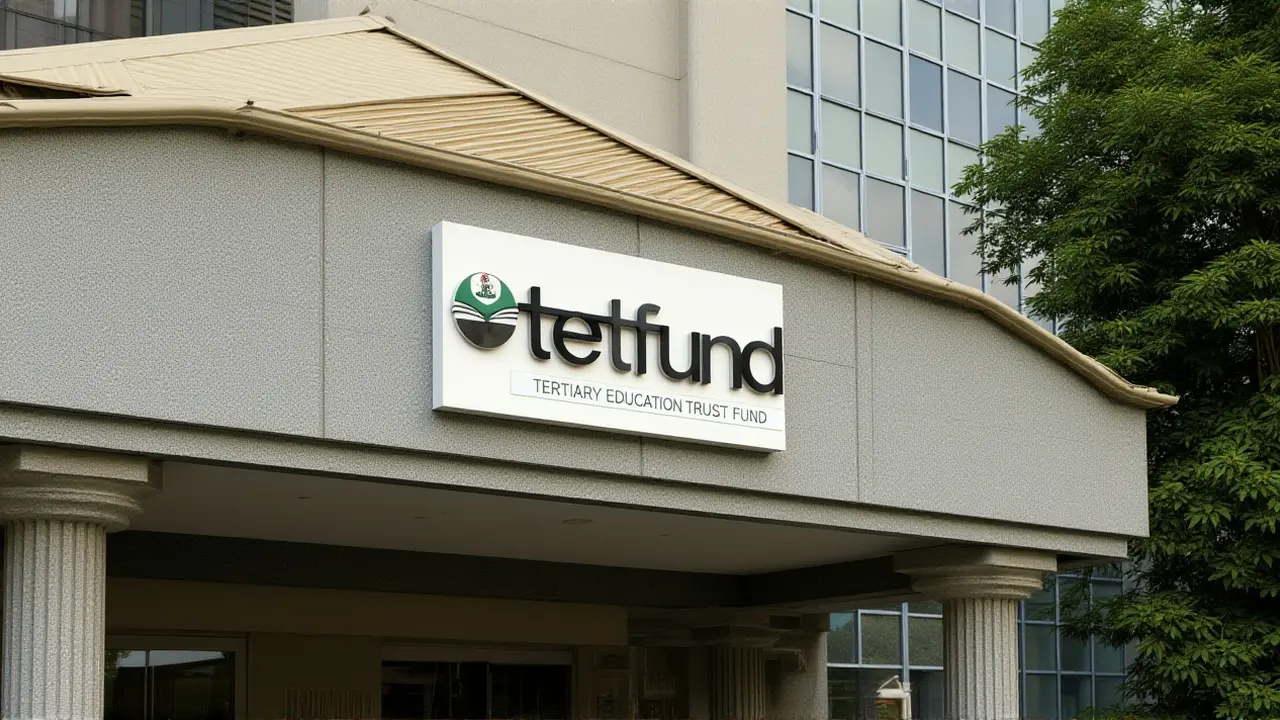
When Arc. Sonny S.T. Echono, Executive Secretary of the Tertiary Education Trust Fund (TETFund), unveiled the latest funding round in Abuja, the reaction wasn't just polite applause—it was relief. For researchers across Nigeria’s public tertiary institutions, this isn't just another bureaucratic announcement. It's a lifeline.
The agency has approved exactly N7.5 billion in research grants for 174 distinct projects under the 2025 National Research Fund (NRF) cycle. Here’s the thing: out of 4,287 initial concept notes submitted nationwide, only these 174 made the cut. That’s an acceptance rate of roughly 4%. In a competitive landscape where funding is often scarce, that selectivity signals a shift toward quality over quantity.
The Numbers Behind the Noise
Let’s break down what this actually means for the ground-level academics and scientists involved. The total pot of N7.5 billion is being split among teams working on everything from agricultural food security to defense technology. Individual grants range from a modest N13.6 million to a substantial N49.97 million.
Why does this variance matter? Because it reflects the scope of the work. A small-scale study on local water purification might need less capital than a multi-year project on renewable energy infrastructure. According to Echono, the majority of these awards went to collaborative research teams rather than solo investigators. This suggests a strategic push toward interdisciplinary work—getting engineers to talk to sociologists, or biologists to partner with data scientists.
The selection process was no walk in the park. After the initial screening of nearly 4,300 concepts, 712 full proposals were developed. These then faced peer reviews and physical oral defense sessions held in Abuja. Imagine standing before a panel of experts, defending your methodology while knowing that one misstep could cost your team millions. That pressure cooker environment ensures that only the most viable ideas survive.
Who Came Out on Top?
While 174 teams are beneficiaries, some institutions clearly dominated the leaderboard. The Federal University of Technology, Minna secured the highest number of grants mentioned publicly, walking away with 18 approvals. Close behind was the Federal University of Technology, Owerri, which bagged 11 grants.
This concentration of funds in Federal Universities of Technology (FUTs) makes sense. These institutions are specifically designed for applied sciences and engineering, aligning perfectly with TETFund’s current focus on practical, industry-relevant solutions. But don’t think conventional universities were left out entirely; the grants spanned across various public tertiary institutions nationwide, covering all six geopolitical zones.
Solving Real Problems, Not Just Publishing Papers
The twist here is the thematic focus. This isn't about abstract theories gathering dust in academic journals. The funded projects target critical national priorities:
- Health and Social Welfare: Addressing disease outbreaks and improving healthcare delivery systems.
- Agriculture and Food Security: Developing drought-resistant crops and efficient farming techniques.
- Energy and Power: Innovations in clean energy and power distribution stability.
- Defense and Security: Technologies aimed at enhancing national safety and conflict resolution.
- Blue Economy: Sustainable use of marine resources, a sector often overlooked but vital for coastal states.
Echono emphasized that these projects were chosen for their potential impact on national development. He noted, “The total amount we are recommending today is the sum of N7.5bn,” highlighting the government’s commitment to using research as a tool for problem-solving. It’s a move away from pure academia toward applied innovation.
What Happens Next?
The money has been approved, but the real test begins now. Implementation will be closely monitored by TETFund’s Board of Trustees. Researchers will need to submit progress reports, ensuring that every naira is accounted for and results are tangible.
For the broader Nigerian education sector, this sets a new benchmark. If you want funding, your proposal needs to solve a real-world problem. It also raises the stakes for future cycles. With such a rigorous selection process, upcoming applicants will need sharper methodologies and clearer pathways to impact. The era of easy grants is likely over; the age of merit-based, high-stakes research funding has arrived.
Frequently Asked Questions
How many research grants were awarded in total?
A total of 174 research grants were approved and awarded under the 2025 National Research Fund cycle. These grants were distributed among research teams from public tertiary institutions across Nigeria after a highly competitive selection process involving peer reviews and oral defenses.
What is the total value of the research funding?
The total value of the approved research grants is exactly N7.5 billion (seven billion, five hundred million naira). This amount covers all 174 projects, with individual grants ranging from approximately N13.6 million to N49.97 million depending on the project's scope and requirements.
Which institutions received the most grants?
The Federal University of Technology, Minna, emerged as a top beneficiary with 18 approved grants. The Federal University of Technology, Owerri followed closely with 11 grants. These figures highlight the strong performance of specialized technical universities in securing research funding under this cycle.
What sectors do the funded research projects cover?
The grants cover priority national sectors including health and social welfare, agriculture and food security, science and engineering, power and energy, blue economy, defense technology, clean energy, education, gender equity, and conflict resolution. The focus is on applied research that addresses immediate societal challenges.
Who announced the grant approvals?
Arc. Sonny S.T. Echono, the Executive Secretary of the Tertiary Education Trust Fund (TETFund), announced the approvals during a press briefing in Abuja. He confirmed that the Board of Trustees had approved the grants following a rigorous evaluation of thousands of submitted proposals.