CAR Opposition Leader Dologuélé Slams Travel Ban as 'Abuse of Power'
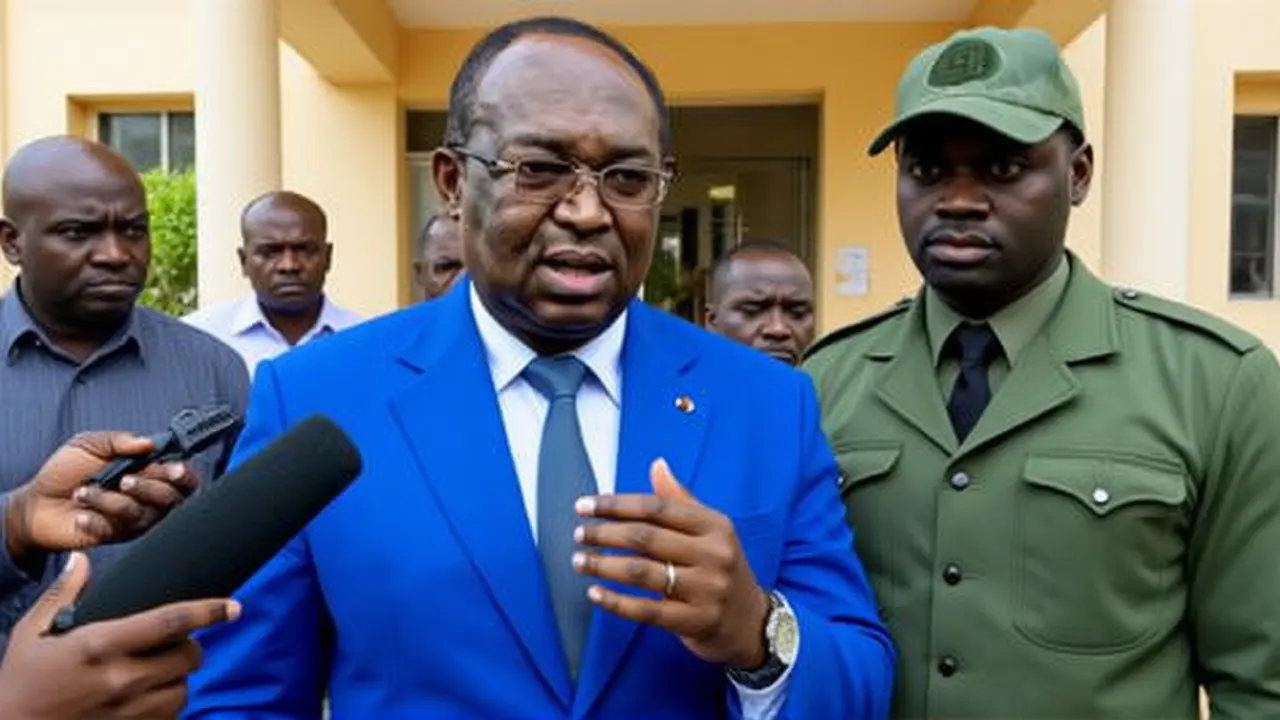
The political temperature in the Central African Republic has spiked once again. On Tuesday morning, just as he was preparing to board a flight to Addis Ababa, opposition heavyweight Anicet-Georges Dologuélé, former Prime Minister and presidential candidate, found himself grounded. Not by weather or mechanical failure, but by a state decree stripping him of his right to leave the country.
Dologuélé, who has been locked in a bitter legal and political feud with President Faustin-Archange Touadéra since the December 2025 elections, was blocked from traveling to attend an African Union Peace Fund meeting. He has chaired the fund’s board of directors since 2018. The incident underscores the deepening rift between the ruling party and its most prominent critics, raising questions about democratic norms in Bangui.
A Citizenship Dispute Turns Political Weapon
Here’s the thing: this isn’t just a travel inconvenience. It’s the latest chapter in a legal battle that began months ago. In October, a court ruled that Dologuélé had lost his Centrafrican citizenship because he held French nationality. This came despite the fact that Dologuélé had voluntarily renounced his French passport in August 2025—specifically to clear the way for his presidential bid against Touadéra.
At a press conference on Wednesday, Dologuélé didn’t mince words. He stated that the minister of the interior had "clearly decided that I was not entitled to a Centrafrican passport and that I was banned from leaving the country." He characterized the move as an "abuse of power by the state." For a politician who has finished second to Touadéra in both the 2016 and 2020 elections, being treated as a non-citizen is a stinging humiliation.
The twist is that this legal maneuver comes after the dust settled on the December 28, 2025 general elections. Those polls saw Touadéra re-elected with more than 70 percent of the vote (some reports cited nearly 78 percent). Dologuélé, coming in second, immediately denounced "massive fraud" and filed an appeal with the Constitutional Court. Now, with the travel ban, the government appears to be tightening the screws further.
Election Repression and Security Concerns
The road to these elections was anything but smooth. The campaign period, which ran from December 13 to December 26, 2025, was marred by allegations of repression. The ruling United Hearts Movement faced accusations of hindering opposition activities. Opposition leaders, including Dominique Yandocka, were imprisoned despite parliamentary immunity. Rallies were banned, and candidates like Dologuélé and Henri-Marie Dondra claimed authorities actively obstructed their campaigns.
Logistics also played a role in the controversy. While MINUSCA (the UN stabilization mission) registered 570,000 voters, security issues meant 58 registration centers remained closed due to violence. Ultimately, about 2.3 million voters were registered. The National Elections Authority (ANE) managed the process, requiring a simple majority to win in the first round—a threshold Touadéra easily surpassed.
Human Rights Watch expressed concerns about the election conduct, while the U.S. and French governments advised against travel to the CAR due to high risks of violence and kidnapping. With Russian security forces guarding major cities alongside UN peacekeepers, the security landscape remains complex and fragile.
Constitutional Changes and Term Limits
To understand why this matters so much, you have to look at the rules of the game. A new constitution adopted in July 2023 removed presidential term limits. This change allowed Touadéra, first elected in 2016, to seek a third consecutive term. Opposition leaders argued this created a "presidency for life," undermining democracy in a region where coups are increasingly common.
Dologuélé’s challenge was always uphill. He had to overcome not just the incumbent’s popularity but also a constitutional framework designed to favor the status quo. By renouncing his French citizenship, he met the legal requirements to run. But the subsequent loss of his Centrafrican citizenship via court order suggests a retaliatory motive.
The timeline adds another layer of tension. Provisional results were announced in early January 2026, with the Constitutional Court set to validate the final winner in mid-January. Yet, even before that validation is complete, Dologuélé is already being marginalized through administrative bans.
What Happens Next?
The immediate future looks uncertain. Dologuélé’s appeal to the Constitutional Court regarding the election results is pending. Simultaneously, his legal team will likely challenge the travel ban and citizenship revocation. If successful, this could reopen the debate over the fairness of the December 2025 elections.
For now, the opposition is fragmented and under pressure. With seven candidates approved by the Constitutional Court—including two former prime ministers—the field was competitive on paper. But in practice, the playing field was tilted. As international observers watch closely, the actions of the Touadéra administration will define whether the CAR moves toward stability or deeper authoritarianism.
Frequently Asked Questions
Why was Anicet-Georges Dologuélé banned from traveling?
Dologuélé was prevented from leaving the Central African Republic because the interior ministry declared he had lost his Centrafrican citizenship. This decision stemmed from a court ruling in October stating he held dual French nationality, despite him having renounced his French passport in August 2025 to qualify for the presidential election.
Who won the December 2025 presidential election in the CAR?
President Faustin-Archange Touadéra won the December 28, 2025 election with more than 70 percent of the vote. His main challenger, Anicet-Georges Dologuélé, came in second and disputed the results, citing massive fraud and filing an appeal with the Constitutional Court.
What changes did the 2023 constitution make to presidential terms?
The new constitution adopted in July 2023 removed presidential term limits. This allowed incumbent President Faustin-Archange Touadéra, who was first elected in 2016 and re-elected in 2020, to run for a third consecutive term in the 2025 election.
How many voters were registered for the 2025 elections?
Approximately 2.3 million voters were registered overall for the 2025 elections. The UN mission MINUSCA registered 570,000 of these voters. However, security challenges meant that 58 voter registration centers remained closed due to violence in certain areas.
Is the travel ban part of broader political repression?
Yes, the travel ban follows a pattern of alleged repression. During the campaign, opposition leaders like Dominique Yandocka were imprisoned, and rallies were banned. Both Dologuélé and other candidates accused authorities of hindering their campaigns, claims denied by the ruling United Hearts Movement.

19 Comments

Navya Anish
Oh my god, this is absolutely tragic! 😱 The sheer audacity of stripping a man of his citizenship just because he had the nerve to challenge the incumbent? It’s not just politics, it’s personal vengeance wrapped in legal jargon. I can’t believe they actually went through with it right at the airport. How embarrassing for the state! 🙄

Subramanian Raman
:) One must wonder if the concept of citizenship is merely a social construct used by those in power to maintain their grip on authority. When Dologuélé renounced his French passport, did he truly lose anything, or did he gain something more profound-a moral high ground that no court can strip away? :)

Shreyanshu Singh
honestly its all just theater really. you think people care about the constitution? nah. they care about who has the guns and who controls the money. touadera knows this. dologuele knows this. the courts know this. its just a game of chess played with human lives as pawns lol

Sohni Bhatt
It is quite fascinating to observe how the so-called 'democratic' processes in these nations are often little more than elaborate charades designed to legitimize authoritarian rule. The removal of term limits in 2023 was a clear signal to anyone paying attention that the political landscape was being fundamentally altered to benefit the ruling elite, and yet international observers continue to feign surprise when such blatant maneuvers occur. One might argue that the true tragedy here is not the travel ban itself, but the collective amnesia of the global community regarding the erosion of democratic norms.

Prashant Sharma
The irony is palpable: a nation founded on principles of liberty chooses to imprison its critics using the very laws meant to protect them. It is a classic example of the paradox of tolerance, where intolerance becomes institutionalized under the guise of legal procedure. Truly, we are witnessing the death of democracy in real time, dressed up in bureaucratic language.

Mike Gill
man i feel so bad for him like imagine getting stuck at the airport bc of some technicality. its really sad how politicians treat each other. hope things get better soon tho

Suresh Kumar
In the grand scheme of history, individual struggles often reflect larger societal fractures. The conflict between Touadéra and Dologuélé is not merely a personal feud but a manifestation of deeper issues within the Central African Republic's political structure. Perhaps the answer lies not in who wins, but in how the society reconciles these opposing forces.

Jay Patel
🤔 Let us not forget that every action has a reaction. The government's move to silence opposition is a direct result of their insecurity. They fear change because they have nothing to offer but corruption. This is a wake-up call for everyone watching from afar. Stay strong! 💪

Pranav Gopal
We need to look at this situation with empathy and understanding. Both sides have valid points, even if they seem contradictory. The key is dialogue and compromise. Let's support peaceful resolutions.

कमल कमल
Look, let me tell you something. Western media always paints these countries as victims. But guess what? Sometimes local leaders make bad choices too. Blaming everything on foreign interference or constitutional tricks is lazy journalism. The truth is, governance is hard, and sometimes tough measures are needed to keep order. People forget that stability matters more than abstract freedoms. You want chaos? Go find it elsewhere. Here, we deal with reality. And reality says that without strong leadership, everything falls apart. So maybe stop crying about one guy's passport and start looking at the bigger picture of national security. :)

harsh gupta
Classic move. First they remove term limits, then they strip citizenship. It's all part of the plan. The elites don't want you to question anything. They want you docile and obedient. Don't fall for it. Wake up sheeple! 🐑

Mukesh Katira
Morally speaking, this is indefensible. To deny someone their right to leave their own country based on arbitrary legal interpretations is a violation of basic human rights. We must stand against such injustices wherever they occur.

Roop Kaur
The geopolitical implications are staggering. With Russian security forces involved, this isn't just a domestic issue anymore. It's a proxy war disguised as an election dispute. The West needs to step up and do something before it's too late. Simple as that.

Ankita Bajaj
Let's focus on the positive! There are still people fighting for justice. Let's cheer them on and spread love instead of hate. We can make a difference together! ✨

Manish gupta
Wow, what a surprise. Another politician gets grounded. Did you really expect anything different? These guys are all the same. Greedy, power-hungry, and utterly corrupt. Boring stuff.

Sanjay Kumar
I think we should give both sides a chance to explain themselves. Maybe there's a misunderstanding. Communication is key.

Gaurav Jangid
Ugh!!! The drama!!! 😩 Why does it always have to be so messy??? Can't they just agree on something for once??? It's exhausting honestly!!!

Ghanshyam Gohel
As an observer, I find this deeply concerning. The lack of due process is alarming. We must demand accountability from all parties involved. No exceptions. Period.

Nathan Lemon
From a cultural perspective, this incident highlights the tension between traditional notions of loyalty and modern democratic ideals. In many societies, allegiance to the state is paramount, and dissent is viewed as betrayal. However, in a democratic framework, criticism is essential for progress. Balancing these perspectives requires nuanced understanding and respect for diverse viewpoints.

Write a comment